Rosemary oil has become one of the most talked-about botanicals in hair care — and for good reason. People love it for the way it can leave the scalp feeling refreshed and hair looking fuller, thicker, and healthier. But here is what most people miss: the results come from how you use it, not just from the oil itself. Use too much, use it the wrong way, or give up after two weeks, and you will not see a difference.
This is the complete, honest guide to using rosemary oil for hair growth. We will cover exactly how to apply it, how much to use, how often, how long it takes to work, the real benefits, possible side effects, how it compares to other popular oils like castor oil, and the common mistakes that quietly sabotage your results. By the end you will have a simple ritual you can actually stick to.
Quick answer: Massage about a dropper-full of rosemary hair oil into your scalp 2–3 times a week, leave it on for at least 30 minutes (or overnight), then wash as usual. Give it a full 90 days. Consistency — not quantity — is what supports the look of fuller, healthier hair.
| Question | Short answer |
|---|---|
| How much to use | About one dropper-full (3–5 ml) for the whole scalp |
| Where to apply | On the scalp, not the lengths |
| How often | 2–3 times a week |
| How long to leave on | 30 minutes minimum, or overnight |
| When to expect results | Healthier feel in 4–6 weeks; fullness around 90 days |
| Best for | Supporting the look of fuller, thicker, shinier hair |
What is rosemary oil and why is it used for hair?
Rosemary is a fragrant Mediterranean herb that has been used in beauty rituals for centuries. In modern hair care it is prized as a scalp-loving botanical: it helps the scalp feel clean, balanced, and stimulated, which is the foundation for hair that looks thick and healthy. A happy scalp is where great-looking hair starts.
There are two forms you will see. Pure rosemary essential oil is highly concentrated and must always be diluted in a carrier oil before it touches your scalp. A rosemary hair oil (like ours) is already blended and balanced with nourishing carrier oils, so it is ready to use straight from the bottle. For most people, a ready-made blend is the simpler, safer choice.
A quick, honest note on expectations: rosemary oil is a cosmetic ingredient, not a medicine. We talk about the look and feel of fuller, healthier hair — not medical regrowth or treating hair loss. Caring for your scalp consistently is the realistic, honest path to hair you feel good about.
Benefits of rosemary oil for hair
Here is why rosemary oil has earned its place in so many hair care routines:
- Supports the look of fuller, thicker hair. By keeping the scalp stimulated and conditioned, rosemary helps create the environment hair needs to look its best.
- Nourishes and balances the scalp. A clean, balanced scalp is the foundation for healthy-looking hair — flaky or congested scalps work against you.
- Helps reduce the appearance of breakage. Conditioned strands look smoother and snap less, so hair holds length better over time.
- Adds shine and softness. Rosemary blends leave hair looking glossy rather than dull.
- Refreshing, herbal scent. The aroma is part of why the ritual feels like self-care, not a chore.
How to use rosemary oil for hair growth, step by step
This is the core ritual. It takes about five minutes and the technique matters more than the amount of oil you use.
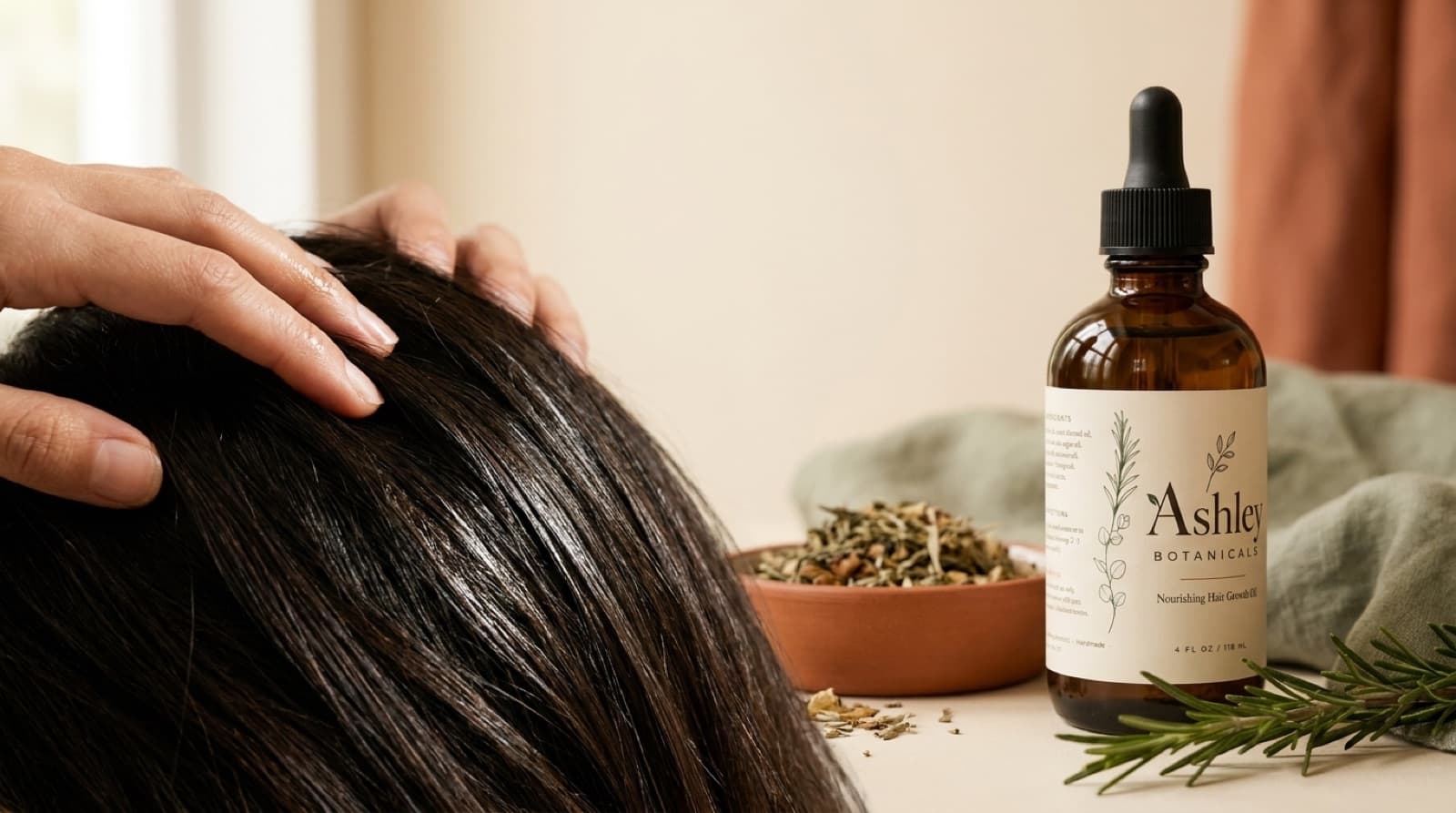
- Start with a few drops. You need less than you think — about a dropper-full (3–5 ml) for the whole scalp. Too much just makes hair greasy without any extra benefit.
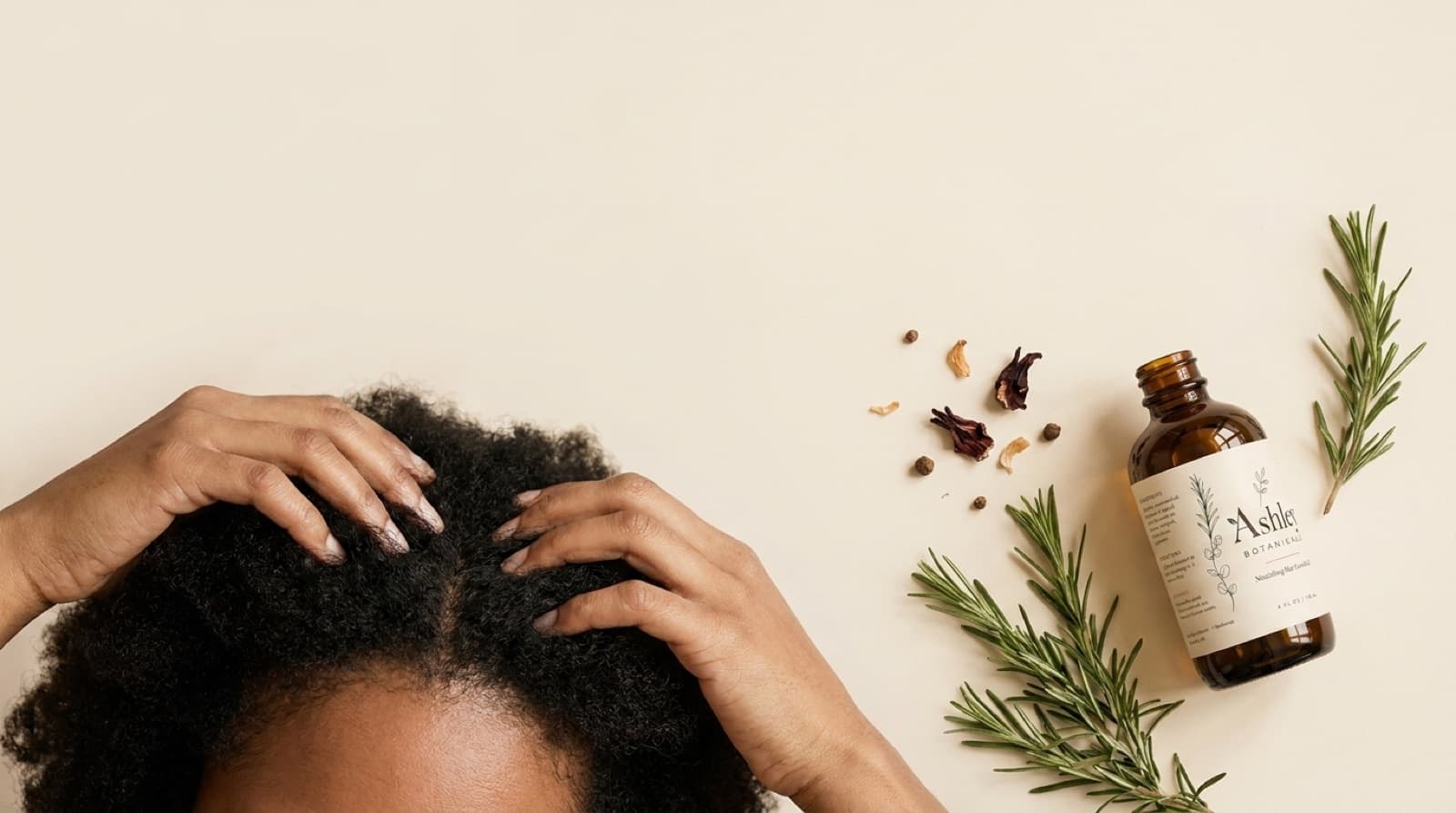
- Apply to the scalp, not the lengths. Part your hair in sections and drop the oil directly onto the scalp, where it can do the most good. The mid-lengths and ends need far less.
- Massage for 3–5 minutes. Use your fingertips (never your nails) in slow, small circles. This step is the secret — the massage itself increases circulation to the scalp and it feels genuinely relaxing.
- Leave it on. Give it at least 30 minutes so the botanicals can absorb. For a deeper treatment, leave it overnight and protect your pillow with a silk scarf or an old pillowcase.
- Wash as usual. Shampoo and condition the way you normally would. If your hair still feels heavy, a second shampoo usually clears any residue.
- Repeat 2–3 times a week. Build it into your routine — Sunday night and a midweek evening works well for most people.
How much rosemary oil should you use?
Less is more. About 3–5 ml — roughly one full dropper — is plenty for an average head of hair. Fine or short hair needs less; very thick, long, or curly hair may want a little more. The goal is a lightly coated scalp you can massage in, not hair that is dripping. Over-applying does not speed up results; it just means a longer wash day.
How often should you use rosemary oil for hair?
Two to three times a week is the sweet spot for most people. Daily use is usually unnecessary and can leave the scalp feeling oily and congested, which works against you. If your scalp is naturally dry you may enjoy three times a week; if it gets oily quickly, start with twice and adjust. The rhythm matters more than the frequency — pick days you can realistically keep.
How long does rosemary oil take to work?
Patience is part of the process. Hair grows slowly — roughly half an inch (about 1.25 cm) per month — so visible change in length takes time. Most people notice their hair looking and feeling healthier, shinier, and less brittle within the first 4–6 weeks, while changes in fullness and length become clearer around the 90-day mark.
That is exactly why we built our routine around a 90-day ritual. Take a clear photo on day one and again at the end of each month, in the same lighting. Progress is gradual and easy to miss day to day — photos let you actually see it.
| Timeframe | What most people notice |
|---|---|
| Weeks 1–2 | Scalp feels cleaner and refreshed; the ritual becomes a habit |
| Weeks 3–6 | Hair looks shinier and softer; less brittle, fewer split-looking ends |
| Weeks 6–10 | Hair feels stronger and holds styles better; breakage looks reduced |
| Around 90 days | Hair looks fuller and healthier overall; length is easier to keep |
The ritual is the secret. A few quiet minutes, two or three times a week, done consistently for 90 days — that is what supports the look of fuller, healthier hair.
Rosemary oil before and after: what is realistic?
You have probably seen dramatic "before and after" photos online. Treat them with healthy skepticism — lighting, angles, styling, and hair length at the time of the photo all change the story. A realistic, honest expectation is hair that gradually looks fuller, feels softer, and holds length better because it is breaking less. Anyone promising overnight transformation is selling hype, not hair care.
Rosemary oil vs other hair oils
Rosemary is often compared with other popular hair oils. Here is how the most common ones stack up — and why a blend of several usually beats relying on just one:
| Oil | Best known for | Texture | Note |
|---|---|---|---|
| Rosemary | Stimulating & refreshing the scalp | Light | The scalp hero of the blend |
| Castor | Deeply conditioning, adds shine | Thick / heavy | Powerful but hard to use alone |
| Black seed | Nourishing a balanced scalp | Medium | A scalp-care favorite |
| Fenugreek | Softening, smoothing strands | Light | Helps hair feel silky |
| Argan | Shine and frizz control | Light | Great finishing oil |
| Hibiscus | Softness and glossy look | Light | Loved in botanical blends |
Rosemary oil and castor oil for hair growth
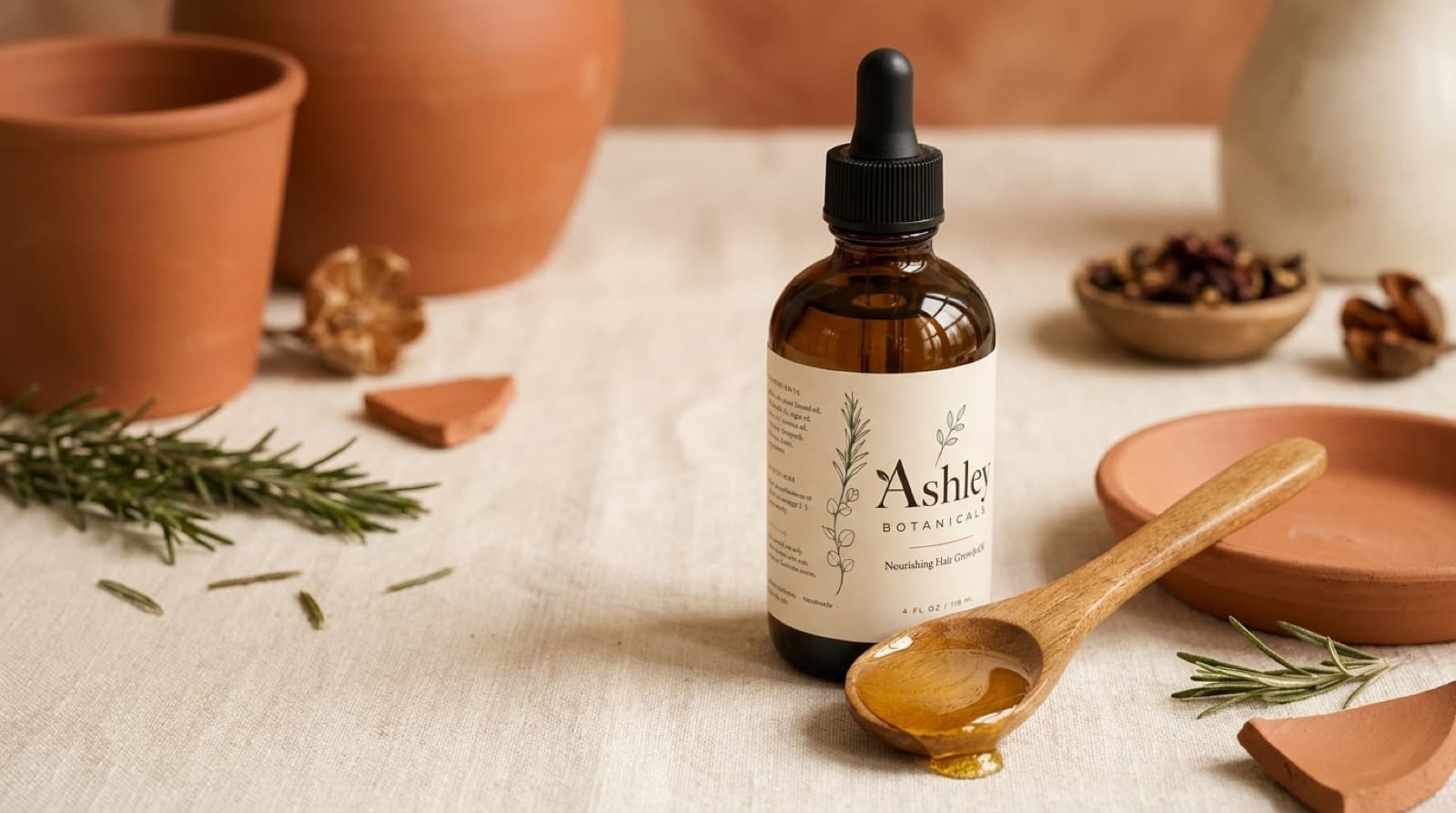
Rosemary and castor oil are a classic pairing, and they work well together because they do different jobs. Rosemary stimulates and refreshes the scalp; castor oil is thick and deeply conditioning, helping strands feel stronger and look glossier. Used alone, castor oil can be heavy and hard to wash out. That is why our Nourishing Hair Growth Oil blends both — along with black seed, fenugreek, argan, and hibiscus — so you get the benefits of each without the greasy heaviness of straight castor oil.
Does rosemary oil really work for hair growth?
Rosemary oil is one of the most popular natural ingredients in hair care because so many people love how their hair looks and feels when they use it consistently. As a cosmetic ingredient, its job is to support a healthy-looking scalp and conditioned strands — and on that front, a consistent rosemary oil ritual genuinely delivers for a lot of people. What it is not is a medical treatment. If you are dealing with significant or sudden hair loss, that is a conversation for a doctor or dermatologist, not a bottle of oil.
Rosemary oil side effects and safety
Used correctly, rosemary hair oil is gentle and well tolerated. A few sensible precautions:
- Patch test first. Apply a small amount to your inner forearm and wait 24 hours before using it on your scalp, especially if you have sensitive skin.
- Never use undiluted essential oil. Pure rosemary essential oil must be diluted in a carrier oil — a ready-made hair oil like ours is already balanced for direct use.
- Avoid contact with the eyes. If it gets in your eyes, rinse with water.
- For external use only. Do not ingest.
- Stop use if irritation occurs. Redness, itching, or discomfort means it is not for you — discontinue and consult a professional if needed.
- Pregnant or nursing? Check with your healthcare provider before adding any new botanical product.
Common mistakes to avoid
Most people who say rosemary oil "did not work" made one of these mistakes:
- Giving up too soon. Two weeks is not enough — commit to the full 90 days.
- Using too much oil. Drowning your hair does not help; it just makes wash day miserable.
- Applying only to the lengths. The scalp is where it matters — that is where you massage it in.
- Skipping the massage. The few minutes of fingertip massage is half the benefit. Do not rush it.
- Being inconsistent. Three times one week and zero the next will not get you there. Pick a rhythm and protect it.
A botanical blend made by hand
Our Nourishing Hair Growth Oil is a handmade, small-batch blend built around rosemary and ten other botanicals — castor, black seed, fenugreek, argan, hibiscus, and more. It is balanced to be ready to use straight from the dropper and designed to slot right into the simple ritual above: apply, massage, leave on, wash. If you have been wanting to start a rosemary oil routine without measuring and mixing your own, it is an easy, honest place to begin.
For external use only. Avoid contact with eyes. Stop use if irritation occurs. These statements have not been evaluated by the FDA. This product is not intended to diagnose, treat, cure, or prevent any disease.