Walk down any beauty aisle and you'll see it: coconut oil, crowned as the do-it-all hero for shinier, longer, healthier-looking hair. It has earned a loyal following for good reason. But if you've been massaging it in nightly and wondering why your hair isn't suddenly cascading down your back, you deserve an honest conversation about what coconut oil for hair growth can and can't do.
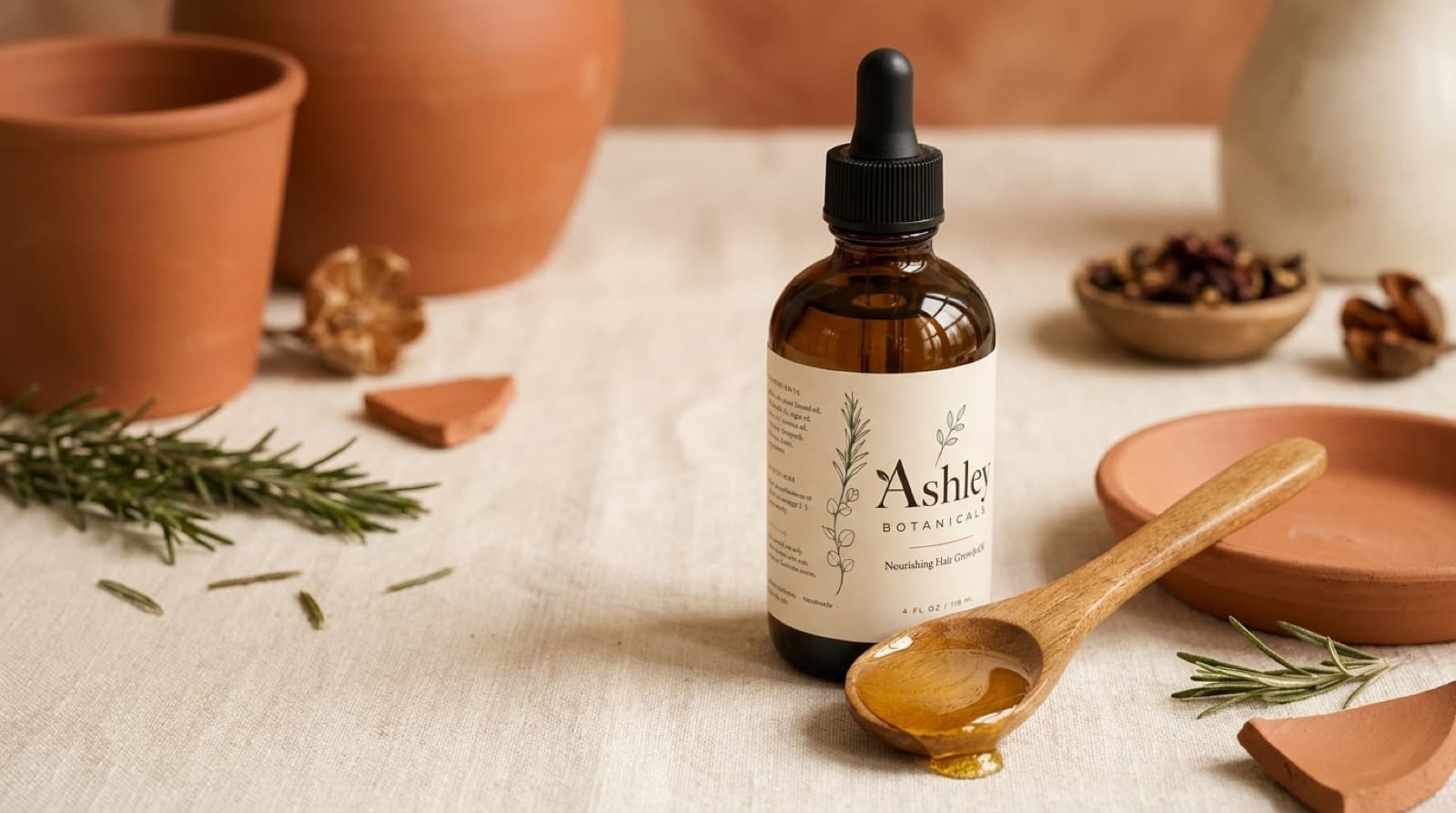
At Ashley Botanicals, we make a handmade botanical hair oil that leans on rosemary, castor, black seed, fenugreek, argan, and hibiscus, not coconut oil. So we have no reason to oversell coconut and every reason to tell you the truth: coconut oil is a wonderful conditioning ingredient, but the story of healthier-looking growth starts at the scalp, with a different set of botanicals.
Quick answer: does coconut oil grow hair?
Not on its own. Coconut oil is one of the few oils proven to penetrate the hair shaft and reduce protein loss, which means less breakage and strands that look longer and healthier over time. But it does not directly stimulate the scalp the way targeted botanicals can. Think of coconut oil as protection and polish for the hair you already have, not a growth serum. For the look of growth, pair it with a scalp-focused, multi-botanical routine.
What coconut oil actually does for your hair
Coconut oil's claim to fame is its molecular size. Its main fatty acid, lauric acid, has a low molecular weight and a straight structure, which lets it slip past the outer cuticle and into the hair shaft itself. Most oils simply coat the surface. Coconut oil goes deeper, and that's where its real benefits come from.
Because it can reduce the protein your hair loses during washing and styling, hair tends to feel stronger, look smoother, and break less. Less breakage means you keep the length you grow, so your hair can look like it's growing faster even though coconut oil isn't changing what happens at the root.
Coconut oil for hair: the real benefits
- Reduces protein loss, so strands feel stronger and break less.
- Adds softness and slip, making detangling gentler.
- Smooths the cuticle for visible shine and a healthier look.
- Helps tame frizz and the appearance of split ends.
- Acts as a pre-wash barrier that limits how much water the shaft absorbs (which can otherwise cause swelling and damage).
Coconut oil pros and cons at a glance
| Pros | Cons |
|---|---|
| Penetrates the hair shaft, not just the surface | Does little to stimulate the scalp directly |
| Reduces protein loss and breakage | Can feel heavy or greasy on fine hair |
| Inexpensive and widely available | May cause buildup on low-porosity hair |
| Great pre-wash and overnight treatment | Protein-sensitive hair can feel stiff or brittle |
| Adds long-lasting shine and softness | Not a standalone solution for the look of growth |
Coconut oil vs other oils: matching the oil to the goal
No single oil does everything. The smartest routines match the right oil to the right job. Coconut oil is a strand-protector. Scalp-focused botanicals are what people reach for when their goal is the appearance of fuller, healthier growth.
| Your goal | Best-suited oil | Where it works |
|---|---|---|
| Reduce breakage, add shine | Coconut oil | On the strands / lengths |
| The look of fuller, healthier growth | Rosemary blend | On the scalp |
| Deep moisture for dry ends | Argan oil | Mid-lengths to ends |
| Sealing in moisture, thickness feel | Castor oil | Scalp and ends |
| Conditioning + soothing feel | Black seed / fenugreek | Scalp |
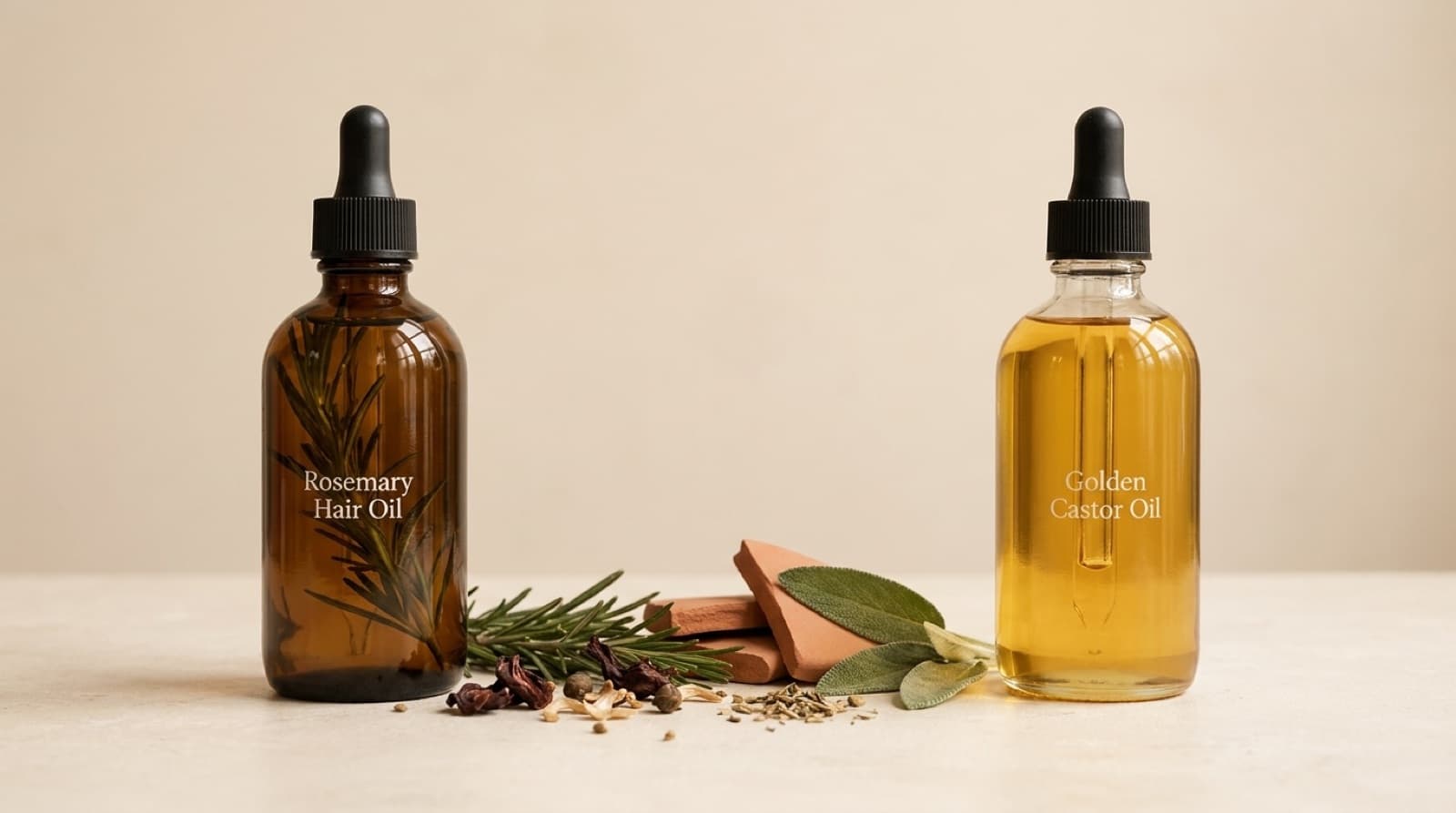
If you're weighing scalp oils specifically, our breakdown of rosemary oil vs castor oil walks through how each feels and where each fits in a routine.
How to use coconut oil for hair (step by step)
Using coconut oil well is mostly about timing and amount. Too much, or applied at the wrong moment, is how it earns its greasy reputation. Here's a simple approach.
- Warm a small amount (start with a teaspoon for short hair, more for long) between your palms until it melts.
- Focus on the mid-lengths and ends, where hair is oldest and driest. Go light near the roots.
- For a pre-wash treatment, leave it in 30 minutes to an hour before shampooing.
- Comb gently to distribute and loosen tangles while the oil adds slip.
- Shampoo thoroughly (you may need two passes) so no residue is left behind.
- Use it once or twice a week. More isn't better, especially for finer hair.
Coconut oil for hair overnight: is it worth it?
An overnight coconut oil treatment can deeply condition very dry, coarse, or damaged hair. Apply it to lengths and ends (not soaked at the roots), wrap your hair in a silk scarf or use an old pillowcase, and wash it out in the morning. For most fine or oil-prone hair types, a 30-to-60-minute pre-wash treatment delivers most of the benefit without the heaviness.
Coconut oil protects the hair you have. A healthy scalp routine is what helps your hair look like it's getting somewhere.— Ashley Botanicals
Who coconut oil suits and who should be careful
Coconut oil is genuinely fantastic for some hair and frustrating for others. The difference usually comes down to porosity and protein sensitivity.
- Loves it: coarse, thick, dry, or high-porosity hair that drinks up oil and craves smoothing.
- Be careful (low-porosity hair): your cuticle lies flat, so coconut oil tends to sit on top and build up rather than absorb, leaving hair looking dull or limp.
- Be careful (protein-sensitive hair): because coconut oil reduces protein loss, some people find it leaves their hair feeling stiff, straw-like, or brittle. If that's you, use it sparingly or skip it.
- Fine hair: use a very small amount on ends only, or you'll flatten your volume.
If coconut oil has ever made your hair feel worse, you're not doing anything wrong. It simply isn't the right ingredient for your hair, and that's exactly why a single-oil approach has limits.
Why scalp-focused botanicals matter for the look of growth
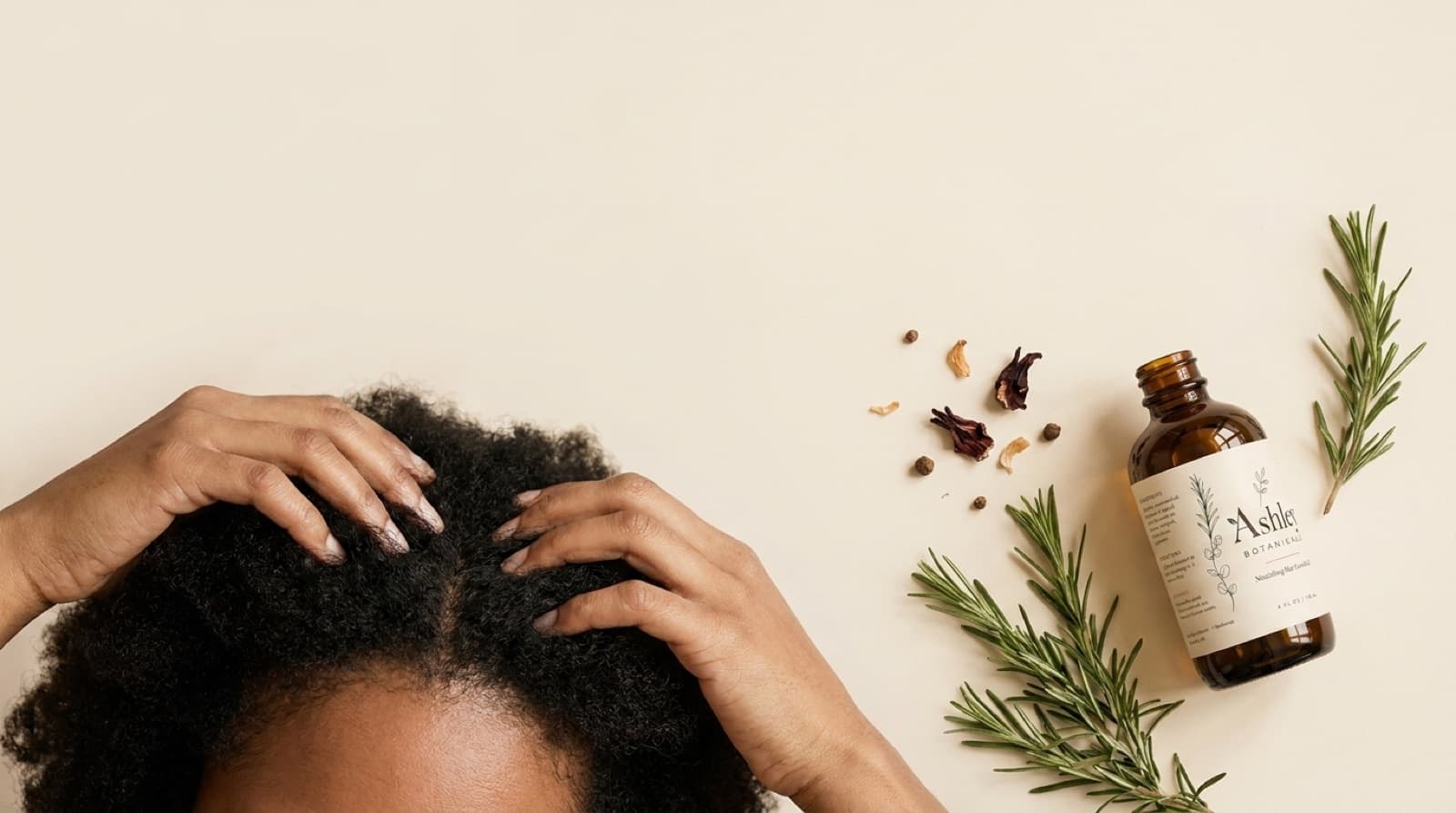
Here's the part the coconut-oil-only crowd often misses: the appearance of growth begins at the scalp. Strand treatments like coconut oil protect length, but they don't address the environment where new hair emerges. That's why so many people who love the feel of a healthy scalp routine reach for rosemary.
Rosemary has become the standout botanical for scalp-focused routines, and people consistently report softer, fresher, healthier-looking results. We dig into the why in does rosemary oil stimulate hair growth, and if you want a practical routine, how to use rosemary oil for hair growth lays out the steps.
Our Ashley Botanicals oil ($24.99) was built around this idea. Instead of a single ingredient, it blends rosemary, castor, black seed, fenugreek, argan, and hibiscus, so your scalp and your strands get attention in one handmade formula. It's the missing scalp half of the equation that a jar of coconut oil simply can't cover.
The honest verdict on coconut oil for hair growth
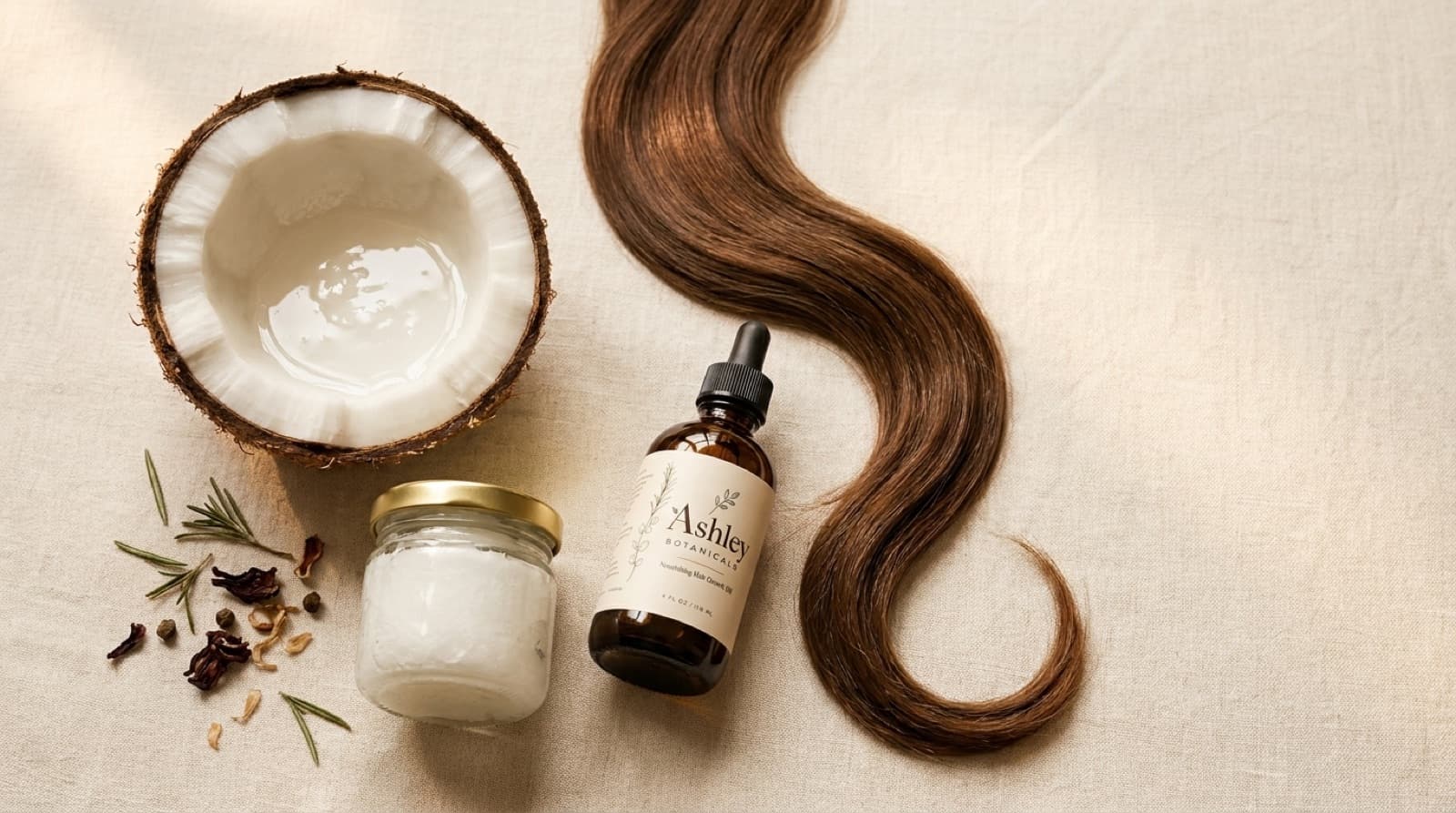
Is coconut oil good for hair? For many people, absolutely. It's one of the best conditioning, breakage-reducing oils you can buy, and reducing breakage helps your hair look longer and healthier over time. But it isn't a growth serum, and pretending otherwise sets you up for disappointment.
The smartest move is to use coconut oil for what it's great at (protecting and polishing your strands) and pair it with a scalp-focused, multi-botanical blend like Ashley Botanicals for the look of fuller, healthier growth. Together, they cover both halves of the story: the hair you have, and the hair that's on its way. For external use only. Avoid contact with eyes. Stop use if irritation occurs.